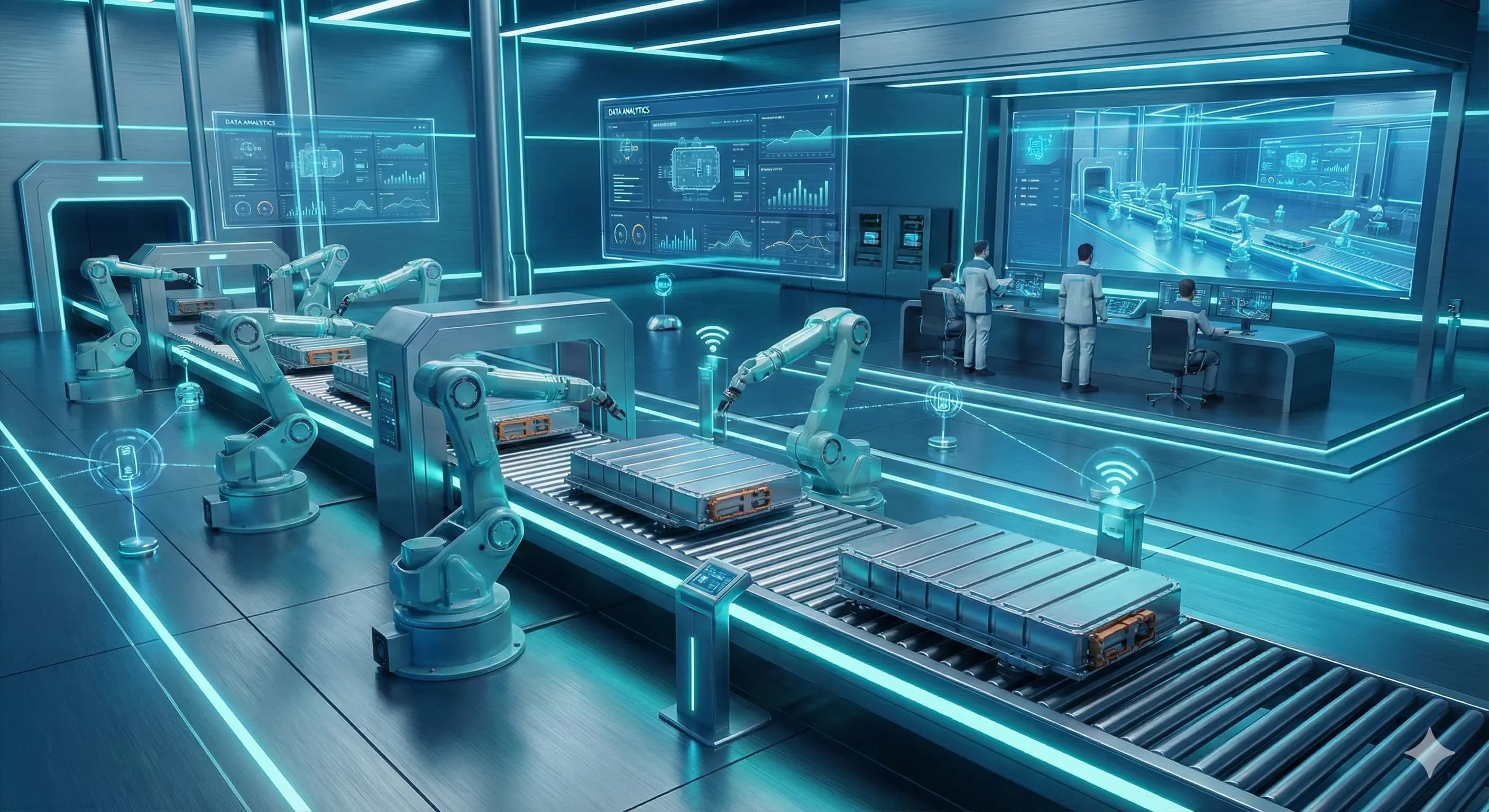
Evolution of Battery Technologies
Modern rechargeable battery technology began in 1991 when Sony launched the first commercial lithium-ion battery. Since then, battery technology has shown tremendous development.
Lithium-Ion Battery Types
Main lithium-ion battery chemistries used today:
NMC (Nickel Manganese Cobalt)
- High energy density
- Widely used in electric vehicles
- Balanced performance characteristics
- Cobalt content raises cost and sustainability concerns
LFP (Lithium Iron Phosphate)
- Excellent thermal stability
- Long cycle life (3000+ cycles)
- Cobalt-free - more sustainable
- Low-cost option
NCA (Nickel Cobalt Aluminum)
- Highest energy density
- Used in Tesla vehicles
- Thermal management is critical
- Ideal for premium segment
Solid-State Batteries
Solid-state batteries, seen as the future of battery technology:
- Uses solid electrolyte instead of liquid
- 50% more energy density potential
- Safer - minimal fire risk
- Faster charging capacity
- Expected to commercialize between 2025-2030
Sodium-Ion Technology
Sodium-ion batteries as an alternative to lithium:
- Abundant and cheap raw materials
- Good low temperature performance
- Ideal for energy storage systems
- CATL and BYD started commercialization
Battery Passport and Battery Chemistry
EU Battery Regulation foresees different requirements based on battery chemistry:
- Detailed declaration of chemical composition
- Documentation of critical raw material sources
- Customization of recycling instructions by chemistry
- Presentation of performance parameters in standard format
DigiPilPass Technology Support
DigiPilPass offers customized battery passport templates for all battery chemistries. Ensure EU compliance regardless of which technology you use.
Etiketler
Batarya KimyasıLityum İyonKatı HalTeknoloji
Category:
Teknoloji