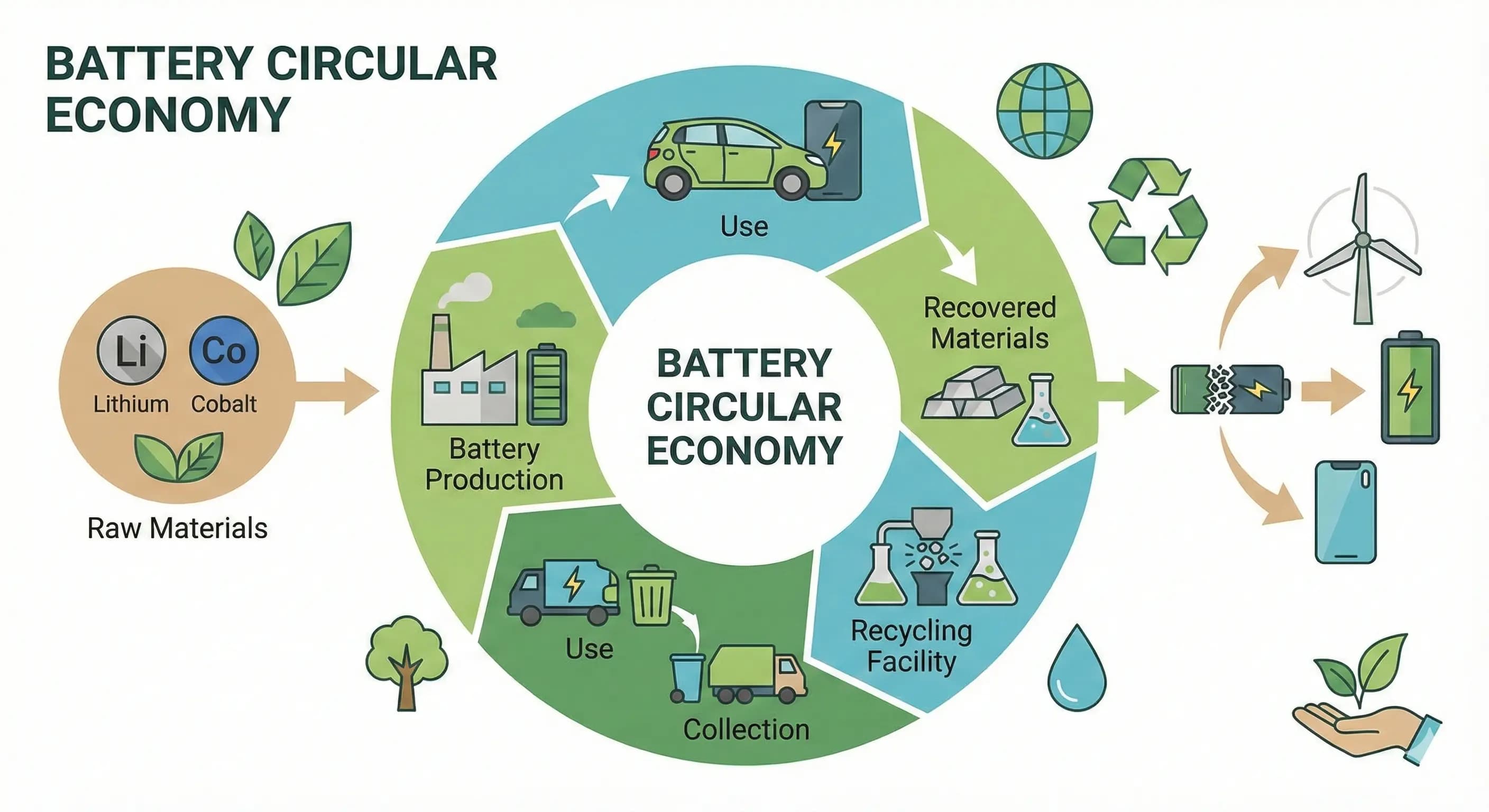
Importance of Battery Recycling
With the rapid growth of the electric vehicle market, the number of batteries reaching end of life is also increasing exponentially. By 2030, over 2 million tons of EV batteries are expected to enter recycling annually.
Recycling Methods
1. Pyrometallurgy (Smelting)
- Melting batteries at high temperatures
- Recovery of cobalt, nickel, and copper
- High lithium loss (50-60%)
- Applicable with existing infrastructure
2. Hydrometallurgy (Chemical Processing)
- Separation of metals with acid solutions
- High recovery rates (95%+)
- All valuable metals including lithium are recovered
- More complex and costly process
3. Direct Recycling
- Regeneration of cathode material
- Highest value preservation
- Not yet at commercial scale
- Most promising technology for the future
EU Recycling Targets
Mandatory recycling targets under EU Battery Regulation:
- 2027: Lithium 50%, Cobalt/Nickel/Copper 90%
- 2031: Lithium 80%, Cobalt/Nickel/Copper 95%
Recycled Content Requirements
Minimum recycled material rates in new batteries:
- 2031: Cobalt 16%, Lithium 6%, Nickel 6%, Lead 85%
- 2036: Cobalt 26%, Lithium 12%, Nickel 15%, Lead 85%
Economic Factors
Economic dimension of battery recycling:
- An EV battery contains approximately 10 kg of cobalt and 60 kg of nickel
- Total value of these metals can reach thousands of dollars
- Recycling costs are decreasing while raw material prices are increasing
- Recycling market expected to exceed $15 billion by 2030
Battery Passport and Recycling
Battery passport provides critical information to optimize the recycling process:
- Exact material composition
- Hazardous substance content
- Disassembly instructions
- Recommended recycling method
Etiketler
Geri DönüşümBataryaDöngüsel EkonomiLityum
Category:
Sürdürülebilirlik