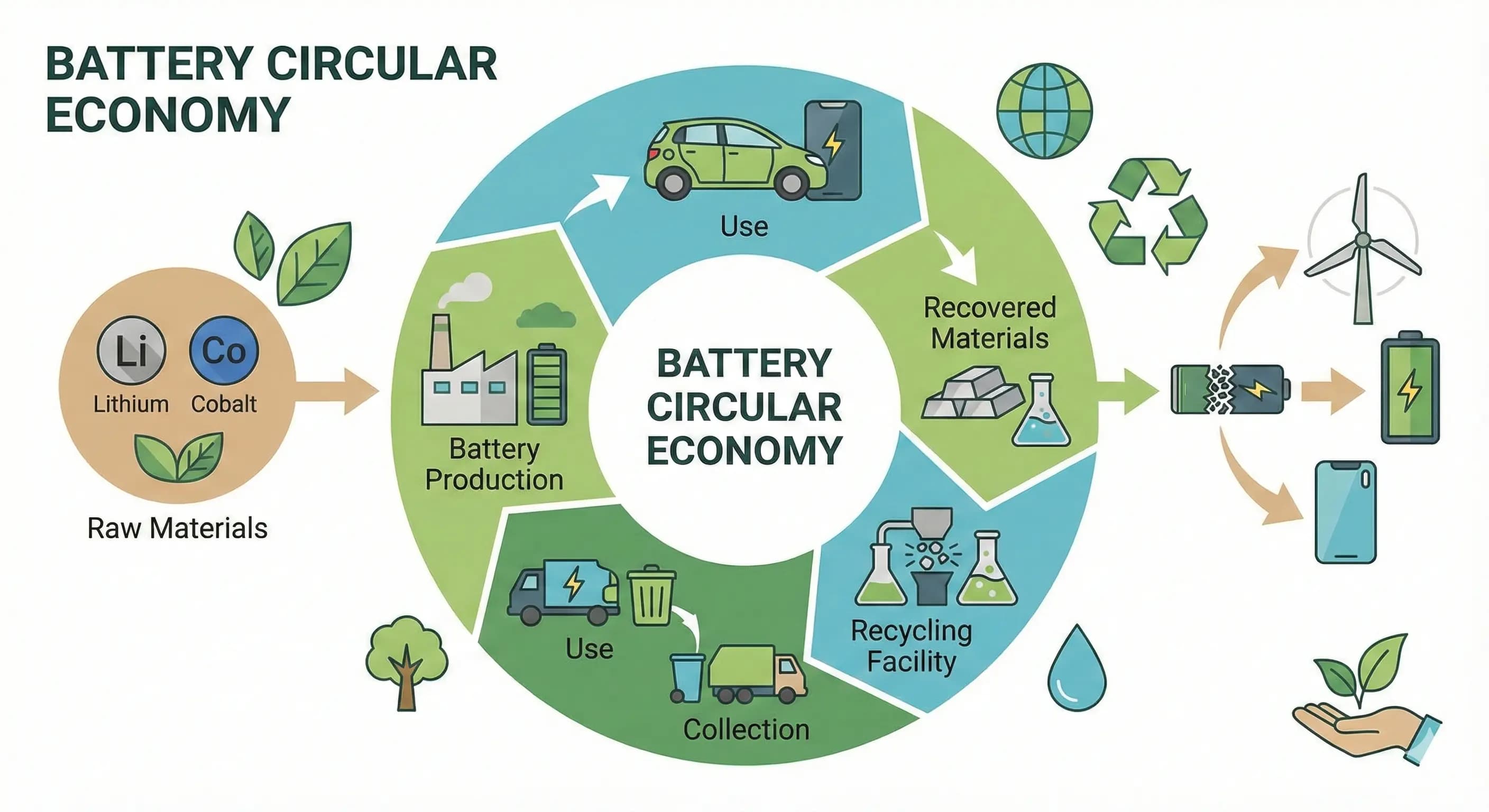
Electric Vehicle Revolution
Electric vehicles (EVs) play a critical role in the decarbonization of the transportation sector. Global EV sales are expected to exceed 40 million by 2030. However, this growth also brings significant challenges in battery production and end-of-life management.
EV Battery Components
A typical electric vehicle battery contains these critical materials:
- Lithium: The basic element of battery chemistry
- Cobalt: Increases energy density
- Nickel: Provides capacity and power
- Manganese: Used for thermal stability
- Graphite: Used as anode material
Environmental Challenges
EV batteries present significant environmental challenges:
- Raw Material Extraction: Lithium and cobalt mining can cause ecological damage
- Carbon Footprint: Battery production requires intensive energy
- End-of-Life Management: Safe processing of used batteries is critical
- Supply Chain Risks: 70% of critical materials come from at-risk regions
Second Life Applications
EV batteries still have 70-80% capacity after completing their vehicle life. These batteries can be:
- Used in energy storage systems
- Ideal for solar energy storage
- Provide grid balancing services
- Used as emergency power sources
Battery Passport and EV Batteries
The battery passport ensures traceability of EV batteries throughout their lifecycle:
- State of Health tracking
- Charge cycle history
- Second-hand value determination
- Material information for recycling
DigiPilPass EV Solutions
DigiPilPass offers specialized solutions for electric vehicle manufacturers and battery suppliers. Accelerate the transition to sustainable mobility with EU-compliant battery passports.